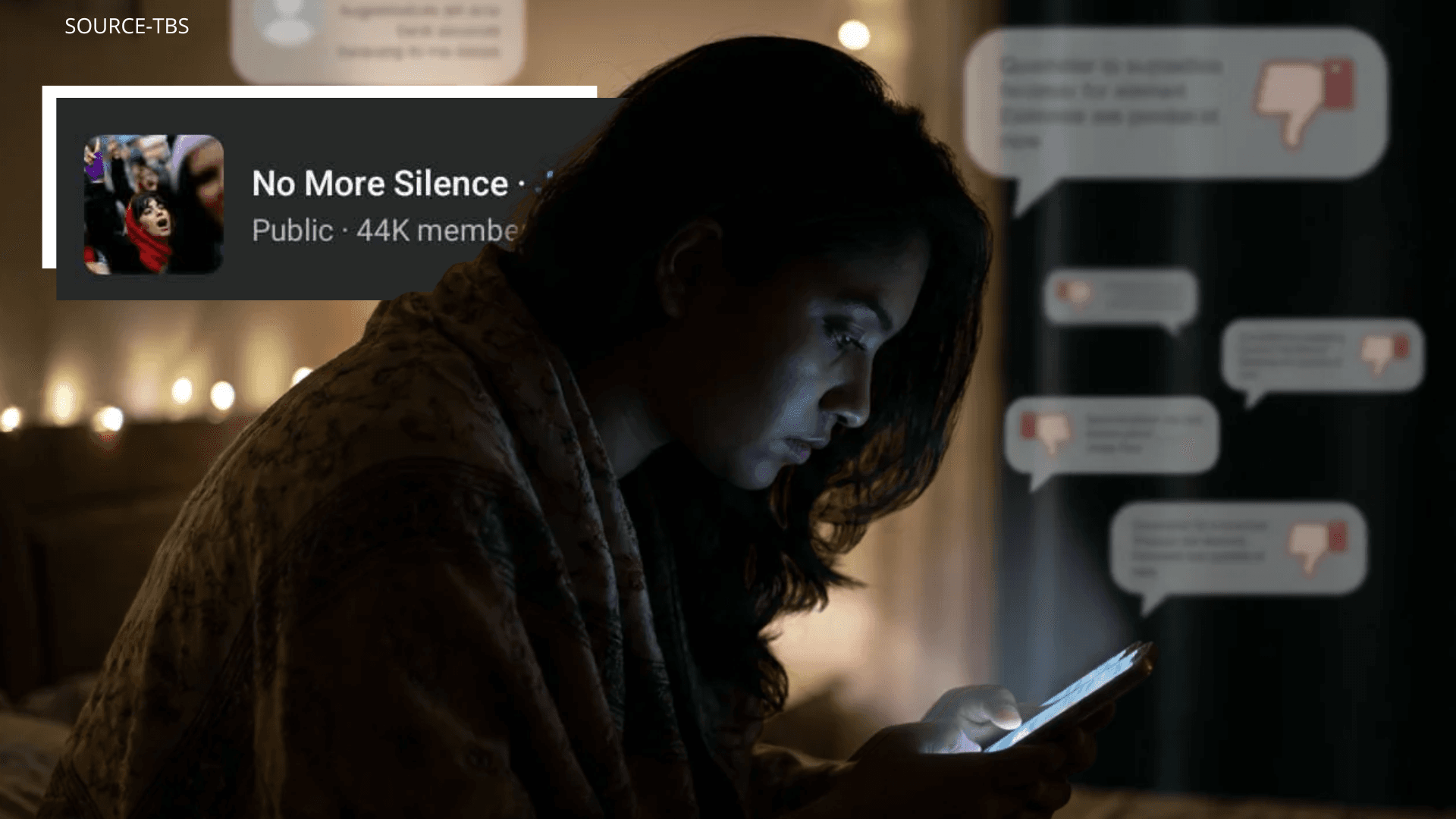
A Facebook group called ‘No More Silence’ is drawing attention to online harassment of women by publishing the photographs, identities and Facebook profile links of people who make indecent, insulting or sexually abusive comments on social media.
The initiative comes amid continued victim-blaming and online abuse directed at women, including victims of sexual violence. Recently, after a 15-year-old girl was raped and murdered in Lalmai, Cumilla, instead of focusing on women's safety and seeking justice, some social media users made indecent remarks about the victim.
The group aims to challenge such behaviour and encourage accountability for online abuse.
Exposing abusive comments
The group’s posts have identified more than 100 people accused of making offensive remarks about women, according to its own account. Some posts have spread widely across social media, while screenshots of comments have reportedly been sent to the individuals’ workplaces, educational institutions and embassies. The group says some people have received warnings from their institutions or employers.
Founded on November 2, approximately a year before the report, the group has more than 30,000 members. Its founder, Abir Ahmed Piyas, a writer and online activist, described it to Prothom Alo as a platform for raising social awareness and challenging comments that undermine human dignity.
Piyas said people should understand that online comments are a form of social behaviour and that freedom of expression comes with a responsibility to respect others. The group’s aim, he explained, is to ensure that people do not remain silent when they encounter abusive behaviour.
The group has two moderators alongside its founder. Umme Suraiya Sumi, an entrepreneur in the garment industry with a master’s degree in political science, and Zakia Hossain, a second-year higher secondary student, help manage its activities.
How the initiative began
The group was established after reports of sexual harassment at a concert held at Jalal Stadium in Habiganj to mark the silver jubilee of the Management Department at Brindaban Government College.
Following reports of harassment at the event, a Facebook account posted a crude comment describing the inappropriate touching of a woman. Other users reacted to the comment with laughter.
Piyas and his associates were angered by the response and decided that people who harassed women or treated such incidents as entertainment should be held accountable. They subsequently launched ‘No More Silence’.
The incident attracted widespread attention after the account holder’s identity was revealed. The individual later claimed that his phone had been lost and that someone else had hacked his account to publish the comment. He also apologised and said he had submitted a formal notification and written undertaking to the officer-in-charge of Habiganj Sadar Model Police Station and the concert organisers.
Targeting abusive comments under crime reports
The group has also highlighted offensive comments posted beneath news reports about crimes against women.
On September 30, after a television channel reported the discovery of a woman's body in a hotel restroom in Cox's Bazar, the group published the photographs and identities of six people who had allegedly made indecent comments beneath the report.
Similarly, following a January 15 report about the alleged gang rape of a passenger on a bus in Savar, the group identified five people who had posted comments appearing to justify the crime.
The group has also supported women who face online abuse after speaking out against wrongdoing. On September 28, content creator Sharmin Riya confronted a motorcyclist riding on a footpath near ECB Square in Dhaka. The rider reportedly said he was using the footpath because of traffic congestion. After a video of their confrontation circulated online, Riya became the target of abusive and obscene comments. ‘No More Silence’ subsequently highlighted some of the remarks and shared the profiles of the people who had posted them.
Riya told Prothom Alo that people often forget their responsibility when commenting from behind a screen. She said disagreement with someone's protest does not justify personal attacks or indecent language. She also urged people to focus on the injustice being challenged rather than trying to humiliate the person speaking out.
Consequences after identities are revealed
In one case, a father shared a photograph on Facebook to celebrate his daughter's admission to college. Although many users congratulated the family, another person posted an indecent comment. After the group highlighted the remark, it spread widely, and the individual deactivated his Facebook account.
The group said it identified the person as being from Feni and found information about his educational institution and restaurant workplace in Cyprus. Screenshots were reportedly sent to the restaurant, the Cyprus Embassy in India and local law enforcement authorities.
In another case, the group reported a young man from Faridpur for making videos involving inappropriate behaviour with his sister. According to the group, police detained him after the matter was publicised. He later apologised on Facebook and promised not to make similar videos again.
The group also identified six people who made suggestive comments beneath a Prothom Alo Online report about a sleeper bus catching fire after its driver and assistant reportedly fled the scene. One of those identified worked for an international financial institution. The group said an internal investigation followed after a screenshot of his comment was sent to his employer. The individual later told Prothom Alo that his workplace had warned him and that he regretted his remarks.
Another case involved a second-year student at Jessore Medical College who posted sexually abusive comments targeting content creator Tumpa Maksudah and her mother. The comments followed a September 21 post by Maksudah about the killing of a teenager in Cumilla. The group forwarded screenshots to the college authorities.
The student acknowledged that his wording was inappropriate and said he had publicly apologised, which Maksudah accepted. He also said the college authorities warned him that repeating such behaviour could result in a one-year suspension.
Concerns about mistaken identities
Despite its efforts to promote accountability, the group’s activities also raise concerns about misidentification and the possible harassment of innocent people.
After the mother of the murdered teenager in Cumilla appealed for justice, an individual posted an obscene comment and identified himself as a sales associate at a Bishworong showroom in Sunrise Plaza, Dhaka. When the group publicised his identity, Bishworong issued a statement saying that no employee by that name worked for the company.
The incident highlights the importance of verifying information before publishing someone's identity online. Comments may originate from fake accounts or accounts controlled by someone other than the named individual. Revealing an identity without adequate verification could expose an innocent person to harassment and reputational damage.
Legal provisions against online abuse
Bangladesh's laws provide penalties for certain forms of harassment and abusive conduct directed at women. Section 509 of the Penal Code criminalises words, gestures or acts intended to insult a woman's modesty. The provision carries a possible sentence of simple imprisonment for up to one year, a fine, or both.
The report also refers to Section 25 of the Cyber Security Act 2026, which prescribes penalties for certain harmful or intimidating digital content involving offences such as sexual harassment, blackmail, revenge pornography, digital child sexual abuse material and sextortion. Where the offence involves a woman or a child under 18, the stated penalties include imprisonment for up to five years, a fine of up to Tk 20 lakh, or both.
Manisha Biswas, the focal person for the Cyber Support for Women and Children platform under the Bangladesh Legal Aid and Services Trust (BLAST), told Prothom Alo that many women hesitate to pursue legal action over abusive comments or manipulated images. According to her, this reluctance can encourage perpetrators to continue their behaviour.
Biswas also noted that offensive comments often attract significant engagement on social media, making it important to build awareness about responsible online conduct and the legal consequences of abuse.
She stressed that while women are encouraged to protect their privacy and remain safe online, social media users must also learn to treat others with dignity and respect.
However, Biswas cautioned against publicly identifying alleged offenders without careful verification. Before disclosing someone's identity, it is essential to establish whether the person actually made the comments or whether a fake account was used in their name.
The ‘No More Silence’ initiative has brought renewed attention to online harassment and the need for accountability. At the same time, its experience highlights the importance of accurate verification, responsible reporting and fair treatment to ensure that efforts to challenge abuse do not lead to further harm.