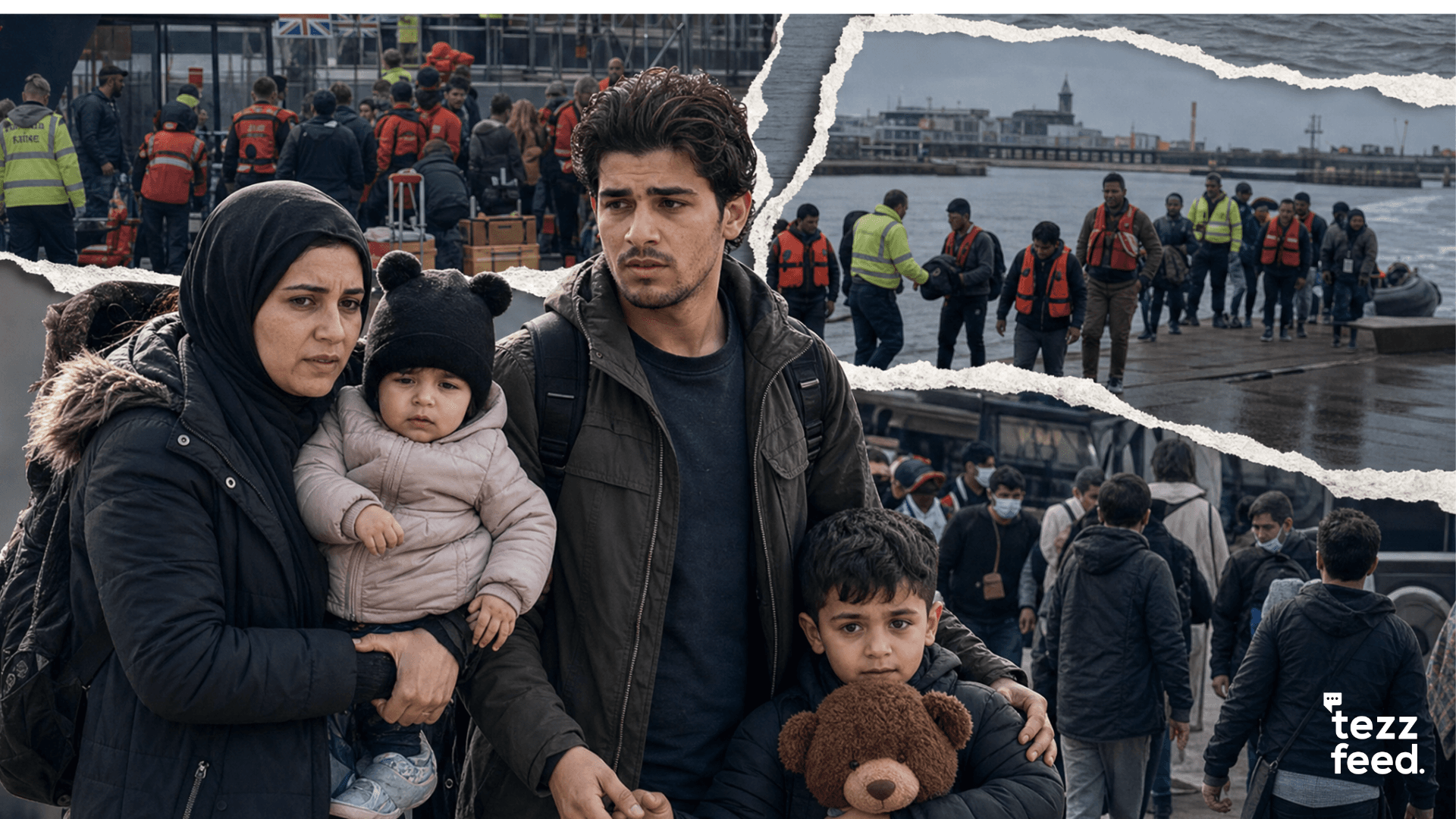
The United Nations High Commissioner for Refugees (UNHCR) has requested the Government of Bangladesh to provide shelter to more than 113,000 newly arrived Rohingya who have fled from Myanmar’s Rakhine State. The request was made on Monday.
Mohammad Mizanur Rahman, Commissioner of the Refugee Relief and Repatriation Commission (RRRC) — a government body overseeing assistance to Rohingya in Bangladesh — shared the information with Turkey’s state-run news agency Anadolu. “Last week, we received a letter from UNHCR requesting shelter for approximately 113,000 Rohingya who have been displaced from Myanmar and are now seeking refuge in Bangladesh,” said Mizanur Rahman.
He further mentioned that many of the new arrivals have set up temporary tents around existing refugee camps in Cox’s Bazar, while others have taken shelter in schools and mosques.
Citing a national daily in Bangladesh, Anadolu reported that the newly arrived Rohingya belong to 29,607 families. Of these, 1,448 families arrived just last week. Most of them are residents of Rakhine State and crossed the Naf River to enter Bangladesh.
“UNHCR has requested that all the newly arrived Rohingya be accommodated in the refugee camps, but we have not responded yet. Our concern is that continued acceptance of Rohingya refugees might further complicate the repatriation process to Myanmar,” Mizanur Rahman told Anadolu.
In August 2017, the Arakan Rohingya Salvation Army (ARSA), an armed Rohingya group, launched coordinated attacks on several police stations and army outposts in Myanmar’s Rakhine State. In response, the Myanmar military launched a brutal crackdown on Rohingya-populated areas.
Facing severe violence—including torture, killings, rape, looting, and the burning of homes—thousands of Rohingya were forced to flee across the Naf River into Bangladesh. The Bangladeshi government provided them shelter in the Kutupalong camp in Teknaf, Cox’s Bazar. Since then, the United Nations and other donor agencies have been providing food and humanitarian aid to the refugees. Currently, over 1.5 million Rohingya live in the Kutupalong refugee camp.
Meanwhile, intense conflict has been ongoing in Rakhine for over a year between Myanmar’s military forces and the anti-junta armed group known as the Arakan Army. Except for the capital city Sittwe, most areas of the state—including the border with Bangladesh—are now under the control of the Arakan Army. This has created a renewed wave of displaced Rohingya seeking refuge in Bangladesh.