An unusual electoral incident in the South American country of Peru has attracted widespread attention after a candidate secured victory in a mayoral election through a public coin toss.
Rubén Quispe Capajaña, representing the political party Somos Perú, became the virtual mayor-elect of the district of Conima in the Puno after winning a random draw organised by the Special Electoral Jury (JEE) of Huancané on November 4, 2026. The extraordinary decision became necessary after the two leading candidates received exactly the same number of votes in the municipal election held on October 4.
According to the final processed results of Peru's National Office of Electoral Processes (ONPE), Quispe Capajaña and his rival, Salomino Mamani Quispe, representing the País para Todos party, each secured 671 votes. With neither candidate gaining an advantage, the electoral authorities proceeded with a legally prescribed tie-breaking procedure.
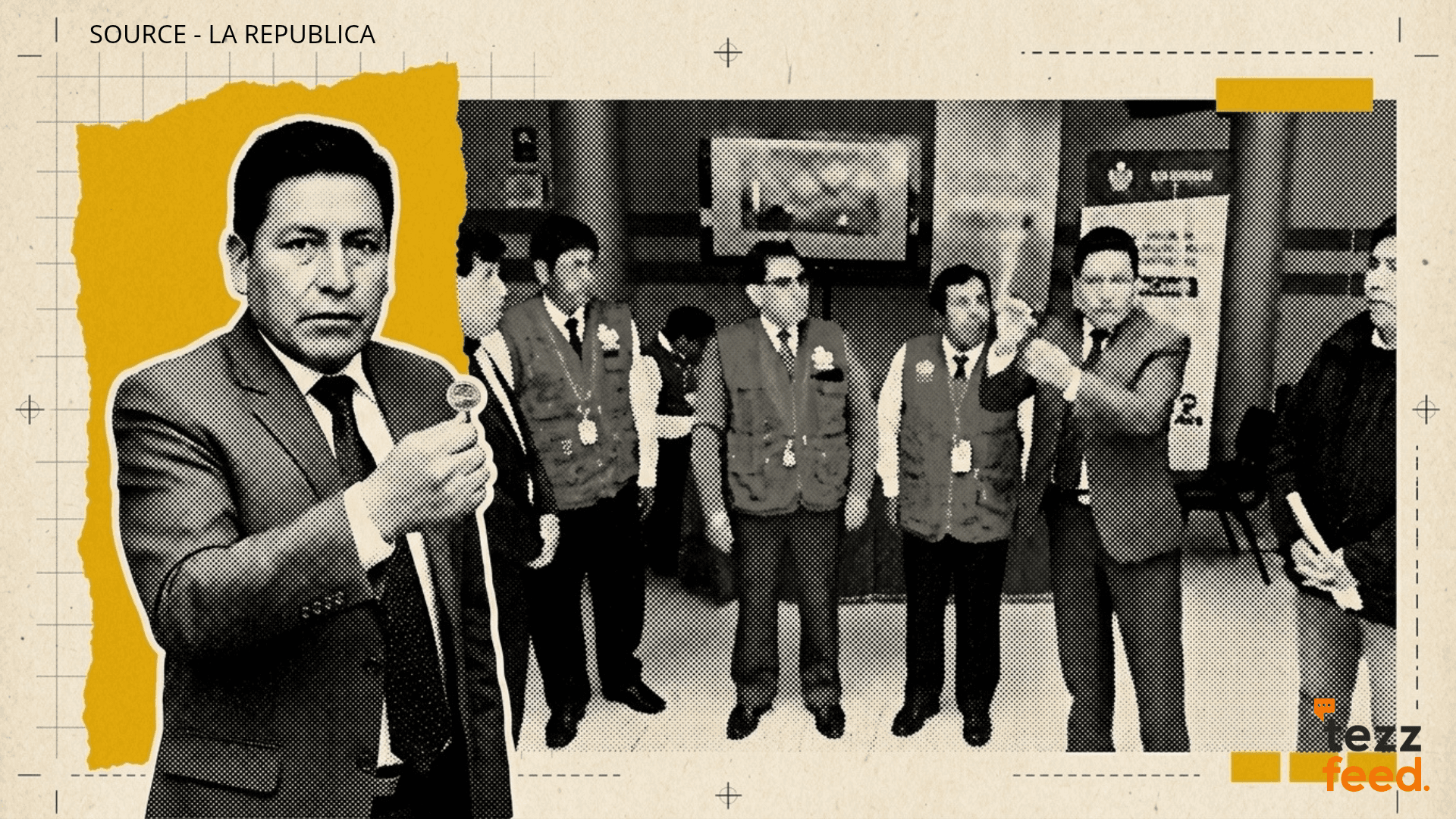
The public draw was conducted under the supervision of the Special Electoral Jury of Huancané. Before the coin was tossed, representatives of both political parties participated in a preliminary draw involving two numbered slips to determine the order of participation. The representative of Somos Perú obtained number one and was given the opportunity to select one of five one-sol coins prepared by the electoral authority. The representative then chose the 'sello' side of the coin, while the opposing candidate was assigned the 'cara' side. Finally, an electoral official tossed the coin into the air in the presence of the candidates and other authorised representatives.
When the coin landed, the 'sello' side was facing up, giving victory to Rubén Quispe Capajaña. Following the announcement, Quispe Capajaña expressed happiness over the outcome.
The proceedings were conducted in a public setting and witnessed by representatives of the electoral authorities, the police, and a notary public. Both candidates' representatives subsequently signed the relevant documents.
Speaking to local media, Quispe Capajaña said that he had arrived at the draw with strong faith and confidence. He also revealed that he had advised his party representative to choose the 'sello' side of the coin, which ultimately proved successful. For Quispe, the victory was particularly significant because it was his first time contesting the mayoral election. He expressed his intention to work for the welfare and development of the people of Conima.
Although the procedure followed the country's electoral rules, the result did not satisfy everyone. Salomino Mamani Quispe expressed disagreement with the idea of determining an election through a coin toss. He suggested that Peru's Congress should consider changing the electoral regulations to introduce a second round of voting when candidates receive identical results.
His argument raises an important democratic question. When two candidates receive exactly the same number of votes, should the winner be determined by chance or should voters be given another opportunity to decide?
Mamani also thanked his supporters and urged the winning candidate to fulfil his campaign commitments, particularly regarding improvements to basic services and the quality of life of local residents.
The unusual outcome is not simply a matter of luck. Peru's municipal election legislation provides a mechanism for resolving certain electoral ties through a lottery-style procedure. The relevant provision is Article 26 of the Municipal Elections Law, which provides for a draw when candidates finish with an equal number of votes. The procedure is intended to provide a legally recognised way of concluding an election when the vote count cannot distinguish between the leading candidates.
However, the incident has renewed discussion about whether such a mechanism is the most appropriate way to resolve a closely contested democratic election.
The Conima election has become an extraordinary example of how unpredictable democratic contests can sometimes be. After weeks of campaigning, public engagement, and the counting of votes, the fate of the mayoral contest ultimately rested on the outcome of a single coin toss.
For Rubén Quispe Capajaña, it marked an unexpected path to electoral victory. For Salomino Mamani Quispe, it was a disappointing conclusion to a campaign in which he received exactly the same number of votes as his opponent.
Beyond the unusual circumstances, the incident offers an important reminder that democratic systems need clear and transparent rules for resolving electoral disputes. Ultimately, Conima witnessed an election in which neither candidate received more votes than the other, yet one emerged victorious through a single toss of a coin. It was a remarkable political moment in which the smallest difference—or, in this case, no difference at all—produced a historic result.