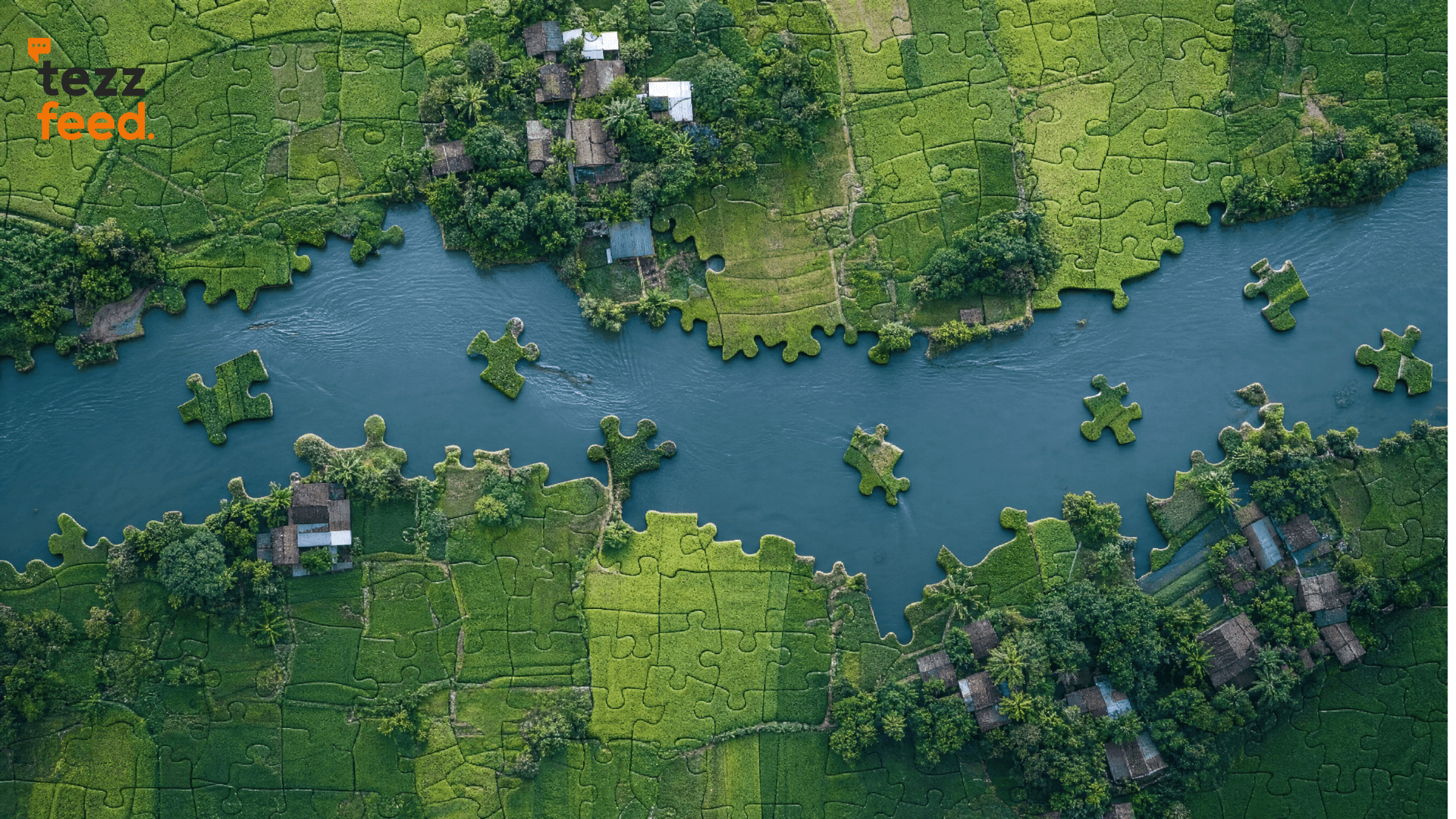
Bangladesh is often called a land of rivers but those same rivers are also slowly taking pieces of the country away. Over the past five decades, the Jamuna, Ganges and Padma rivers have eroded around 1585 square kilometres of land according to government data and satellite analysis by the Centre for Environmental and Geographic Information Services (CEGIS).
Rivers in Bangladesh are constantly changing their courses. New sandbars, known as chars, can appear in places where there was once water. Around 433 square kilometres of land has re-emerged through this natural process but even after counting this new land, Bangladesh has suffered a net loss of about 1153 square kilometres over the period studied.
The Jamuna has been responsible for the biggest share of the erosion. CEGIS data covering 1973–2025 shows that the river alone accounted for about 60 percent of the total land lost by the three rivers. The Ganges and Padma have also caused major losses and this is not just a problem of maps changing because people actually lose their homes, farms, roads and businesses when the riverbank disappears.
For families living beside these rivers, moving once may not be enough. Some families are forced to relocate several times as new areas are swallowed by the river. Research published in Earth Systems and Environment has also examined how erosion along the Jamuna has directly contributed to population displacement.
This can completely change people's lives too. A farmer who loses their land may have no choice but to move to a city and find work there. Some people end up in informal settlements, working as day labourers, domestic workers or rickshaw pullers. So when a river takes away a piece of land, it can also take away someone's source of income and their connection to their home.
River erosion is a natural part of Bangladesh's constantly changing delta and not every new piece of land stays permanently. NASA's satellite observations of the Padma have shown just how dramatically the river can change its shape and location over time.
The most worrying part is that this is not only a problem from the past. A recent projection cited by climate researchers estimates that 26.6 percent of climate related displacement in Bangladesh by 2050 could be linked to river erosion. For a country where millions of people depend on rivers for farming, fishing and transportation, river erosion is more than just land disappearing from a map because it is also people's homes and livelihoods disappearing with it.